

Keep routes usable and better supported
Preparation before laying
We assess levels, drainage and failed areas before the new surface is installed.
Relevant road training
Streetworks-trained capability adds reassurance on highway-facing surfacing work.
Safe sectional planning
We can organise work in stages to manage movement and access more sensibly.
Durable road surfaces start with proper preparation
A road surface only lasts when the groundwork, levels and drainage have been thought through first. We work as road surfacing contractors in Frome on access roads and private or commercial routes that need a durable finish for repeated vehicle traffic. Before laying begins, we assess the existing surface, traffic loading, tie-ins, edges and water run-off, because each one affects the preparation required. That may involve correction of levels, removal of failed areas or more substantial base work to make sure the new surface has something dependable underneath it.
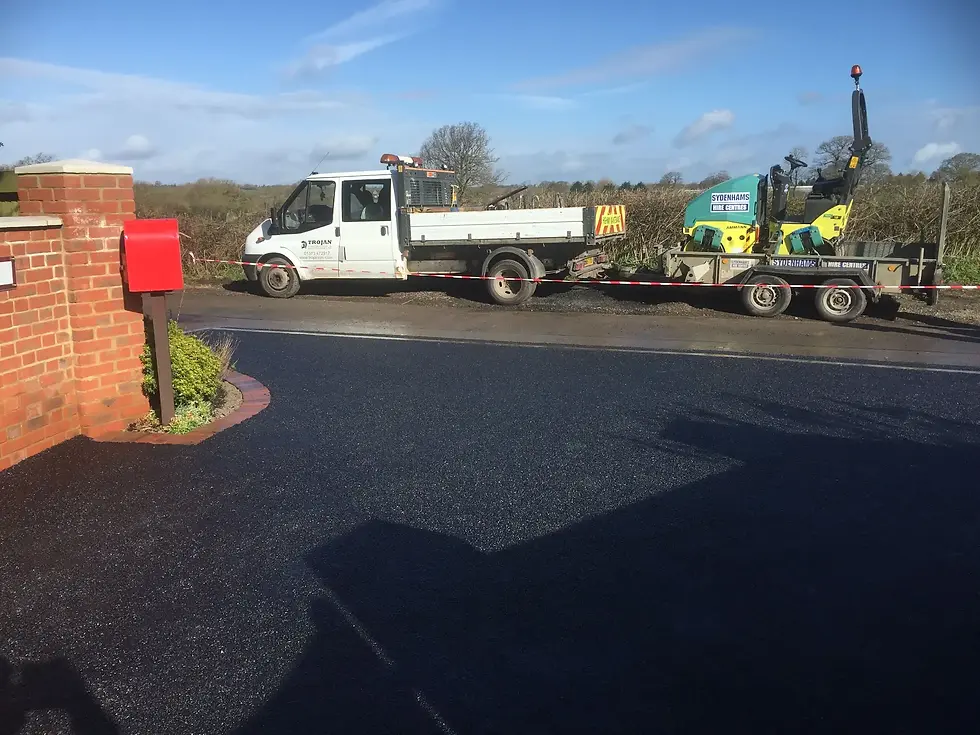
Organised for safe movement and practical access
Road work has to be handled with a bit more order than simply shutting your eyes and following the roller. We plan plant access, traffic management needs and how the work can be broken into sections to keep site movement safer and more predictable. Our Streetworks-trained capability is directly relevant where the job sits close to highway conditions or needs an understanding of road construction practice. The aim is a surface that performs under traffic, with the site organised sensibly while the work is happening.
Frequently asked questions
What kind of road surfacing work do you take on?
We work on access roads and private or commercial routes that need a durable surface for regular traffic. The job may involve correcting levels, dealing with worn areas, preparing the base and laying a new running surface that ties in properly with the surrounding edges.
Why is drainage important on a surfaced road?
If water has nowhere sensible to go, it can sit on the surface, affect use and shorten the life of the finished work. That is why we assess run-off, levels and tie-ins before the material is laid. Good road surfacing depends on the shape underneath as much as the material on top.
Can road surfacing be carried out in sections?
Yes, where the site and use of the route make that the better option. Sectional working can help maintain safer movement, organise plant access and keep the project more manageable, especially where the route still needs some controlled use while the work is under way.